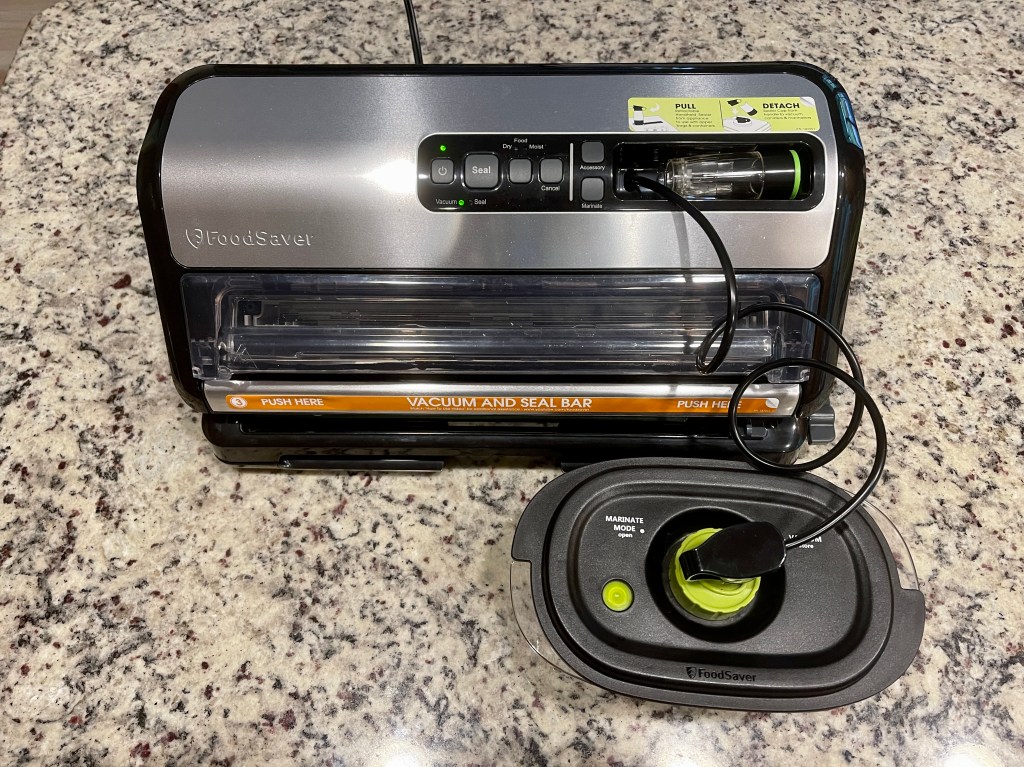
Sorry. I’ll see myself out. But before I go, let me actually explain why the vacuum sealer has become one of my absolute favorite tools in the kitchen.
Protecting frozen food is a no brainer. We pulled some steaks that had been frozen in March of 2020 in September of 2021. They still tasted fresh. After 18 months. There was no freezer burn flavor, nor any other absorbed flavors. Vacuum sealing before long term freezing really does help seal in the flavor and quality for the long haul. Anything that let’s us extend our food’s longevity is welcome.
- Quick tips:
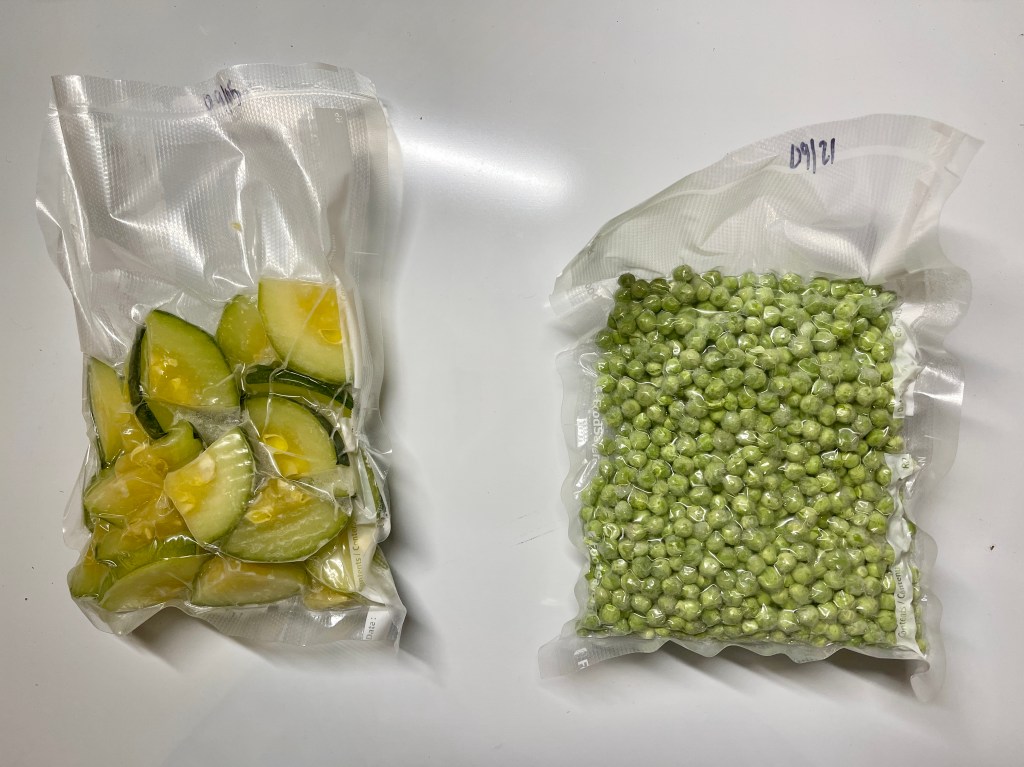
- Pre-freeze softer foods like berries or zucchini on a sheet pan before vacuum sealing, otherwise you really risk squishing the food into a misshapen mass of blech.
- Have those big 3-4 pound resealable bags of store bought frozen vegetables? Break them up by desired portions and vacuum seal separately. The original resealable bags are good, but you are still letting air into those bags every time you open them. Which means the last portion will never taste as good as the first.
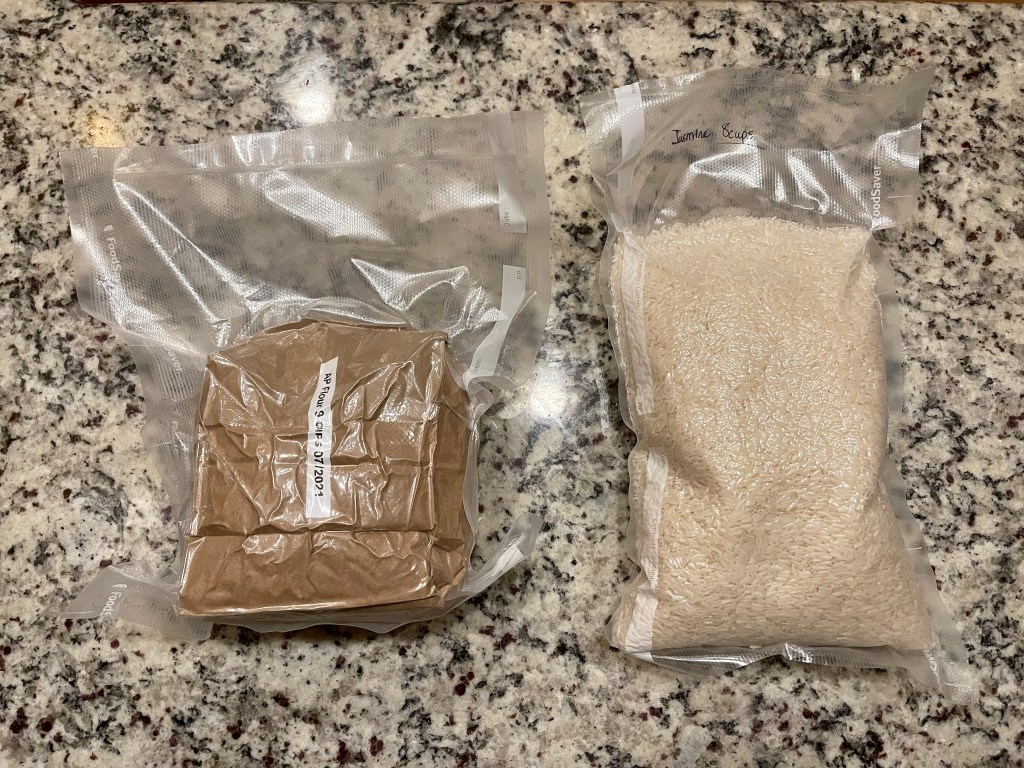
Buy in bulk, store by portion. Buying long term goods like rice in large quantities is great, but I have never loved the idea of storing in 5 gallon pails. Or at least just dumping it all into one pail and then opening and closing it. By pre-portioning out the foods and sealing, I can grab a portion at a time to use without exposing all the rest. I also end up being able to create my own portions as I want.
- Quick tips:
- Figure out what size containers will store some food items for short term use and vacuum seal those amounts. As an example, we keep an 8 cup mason jar in the kitchen for our rice. When I buy 25 pound bags of rice, it gets split into 8 cup portions and sealed. This makes it easy to inventory and track how many meals we have on hand.
- Flour is tough to vacuum seal because it is so fine. If you can come up with a portion that fits in a paper lunch bag that is then taped shut, you can keep the flour from ruining your seal. Vacuum sealing flour helps with longevity and will protect better than the standard paper bags.
With the right accessories, even canning jars can help store the things you need. When looking for a vacuum sealer, make sure to get one with an accessory port. You can seal dry goods like coffee beans, or dehydrated foods, that would normally risk puncturing the bags, in jars to prolong their shelf life. Even things like dehydrated zoodles can be sealed in jars without crushing and breaking them.
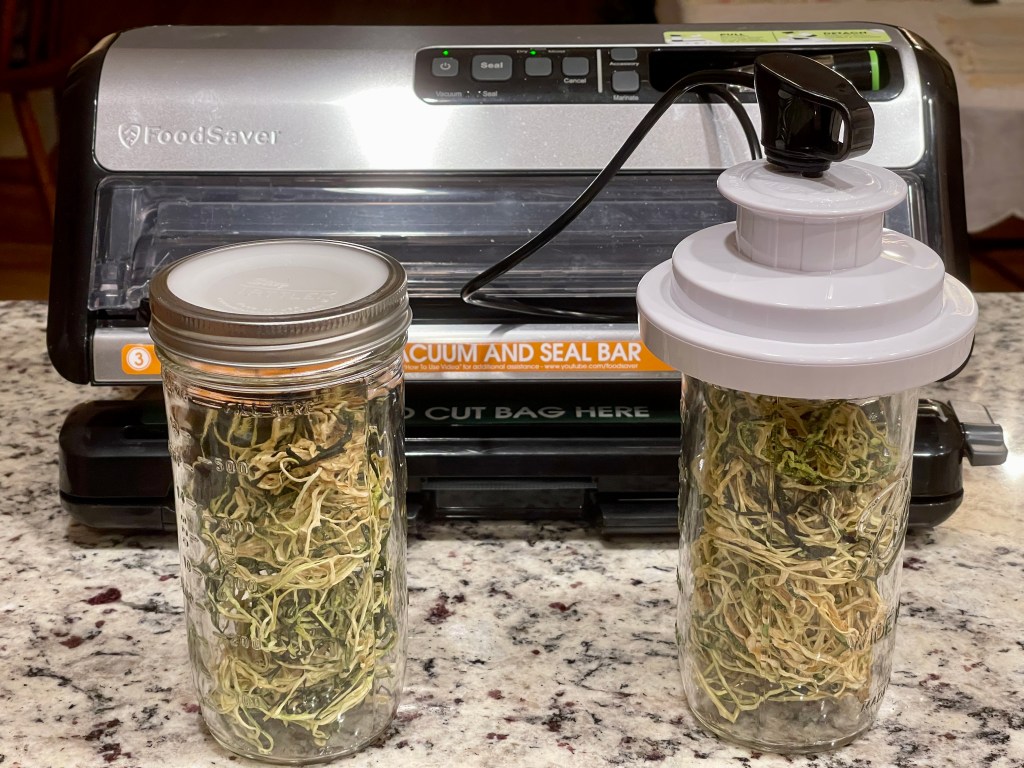
- Quick tips
- Tattler reusable lids and seals will work as well as standard canning jar lids. You can then screw rings down to keep the seals in place. I have had some lids let go without the rings, but a quick reseal will solve that problem. Don’t however, expect to use the standard metal lids for canning once use for vacuum sealing.
- Make sure to check seals on a regular basis, even with rings screwed on
And finally some random things I’ve had good luck with:
- I’ve only ever used the name brand bags with my sealer. While there are cheaper rolls out there, I worry about quality. I’ve had good luck with the standard Food Saver Brand rolls, so have stuck too those. I don’t want to risk a bag puncturing in long term storage.
- Cutting a bag long for the first use will extend the life of the bag. When I freeze butter by the pound, I cut the bag almost half again as long as necessary. Then when I open it, I cut just below the seal on the long end. The bag will be good to use for several more pounds of butter by being smart about sealing and cutting.
- Save used bags if they are not ruined by the food inside. I have reused bags that held frozen butter (still wrapped), flour (in the paper bag liner) and rice more than once. Not only does this save money over the long haul, but it will keep you in bags if they become harder to come by.
- The accessory port combined with the marinating/storage containers really make quick work of marinating meat. Not a necessity, but if you can pick up a model with the accessory port or the accessory built in, it does open up possibilities.
- Vacuum sealing can really help protect your stores from environmental changes. We had a summer where the dehumidifier in the basement was on the fritz. The humidity was high enough that we lost some non properly stored items to mildew. Two large bags of flour were lost, along with several boxes of pasta. The flour was the bigger loss. Since then the humidifier has been replaced and that risk is not all that great. But, items sealed won’t be at risk if it happens again.
A good vacuum sealer by FoodSaver can run anywhere from $72 to $150 or more on Amazon. It is not a small investment by any means. However, I have had good luck with longevity. My first sealer was the base model and I got over 9 years out of it before it finally sounded like a dying yak. I’ve been going a couple years on my second and it has shown no signs of failing.
When you factor in the savings you can gain from buying many foods in bulk, the ability to split foods into manageable portions, and the improved storage life of vacuum sealed foods, the true cost of owning a vacuum sealer really does make sense in just about anyone’s kitchen. Doubly so for those of us who are storing for more than just the coming week.
 Prepared To Cook